What is Nairobi National Park?+
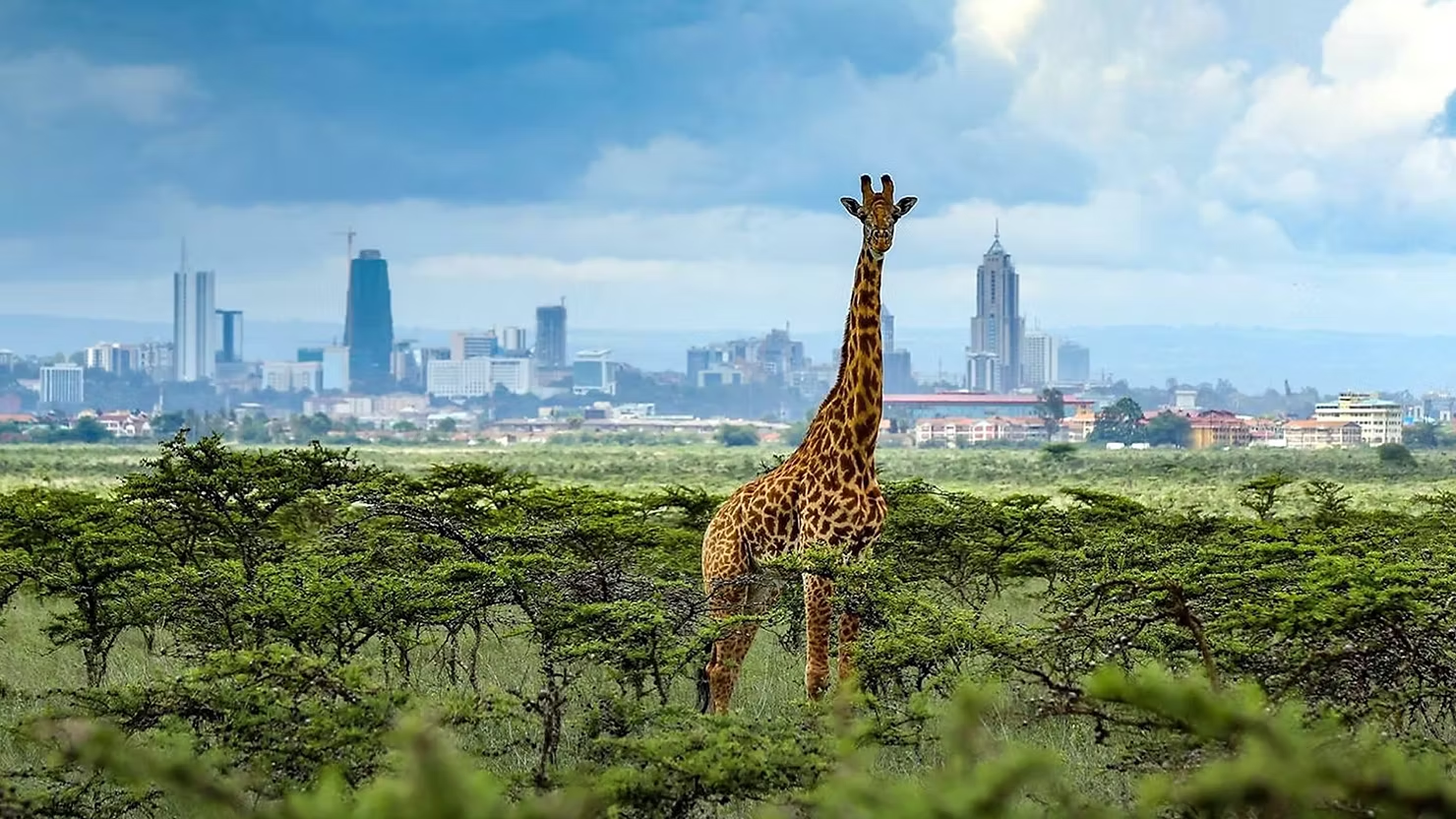
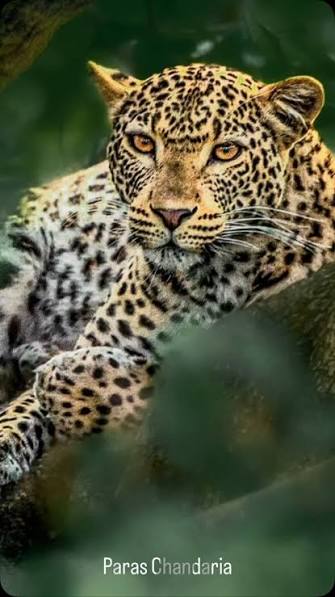
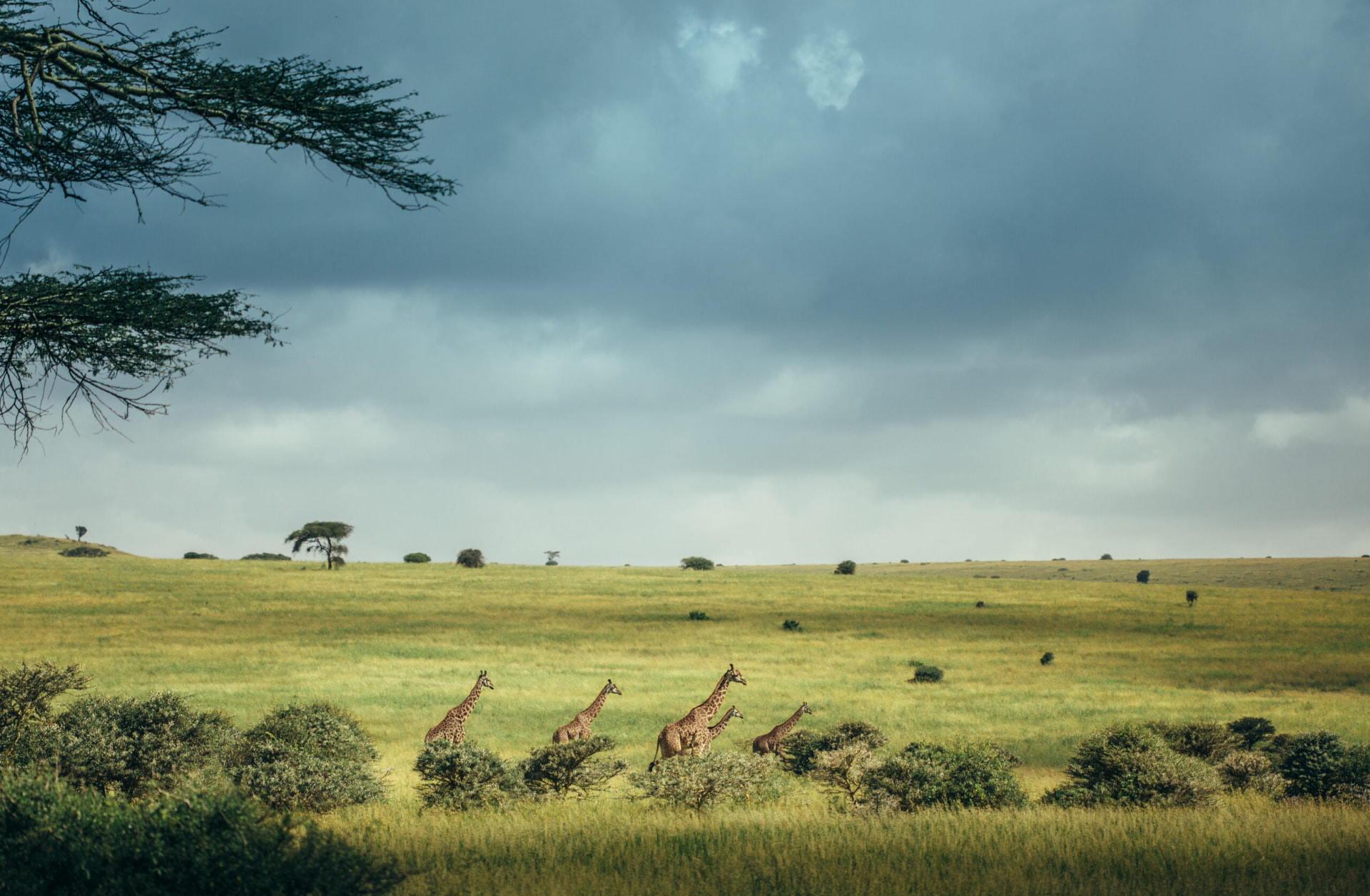
Nairobi National Park is Kenya's first national park, gazetted in 1946. It is a 117 square kilometre reserve of open grassland, acacia, rocky valleys and riverine forest on the southern edge of Nairobi, holding lion, leopard, cheetah, buffalo and one of Africa's densest black rhino populations — with the city skyline visible behind the plains.
Where is Nairobi National Park?+
Nairobi National Park lies just 7km south of Nairobi city centre, in Nairobi County, southern Kenya. It is one of the only national parks in the world found within a capital city.
How big is Nairobi National Park?+
The park covers 117 square kilometres. It is fenced on three sides, with the southern boundary along the Mbagathi River left open to the Kitengela dispersal area, allowing zebra and wildebeest to move seasonally between the park and the surrounding plains.
When was Nairobi National Park established?+
It was gazetted in 1946 as Kenya's first national park, after a long campaign by naturalist Mervyn Cowie. The Ivory Burning Site Monument inside the park marks the 1989 burn of twelve tonnes of confiscated ivory.
What animals can you see in Nairobi National Park?+
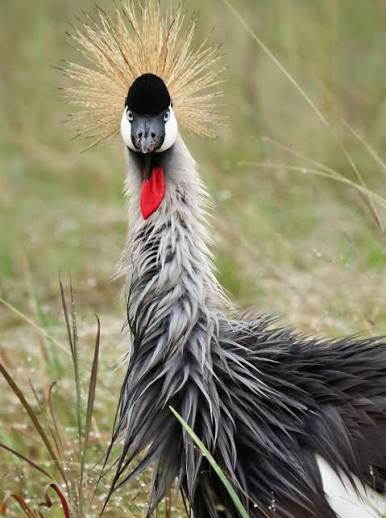
Black and white rhino, lion, leopard, cheetah, buffalo, Maasai giraffe, eland, zebra, wildebeest, hippo, crocodile and more than 100 other mammal species, plus over 500 recorded bird species around the Athi dams and forest edges.
Are there elephants in Nairobi National Park?+
No. The park is too small to support elephant herds. The closest elephants are the orphaned calves at the Sheldrick Wildlife Trust nursery on the park's northern boundary, which most visitors combine with a morning game drive.
Can you see lions in Nairobi National Park?+
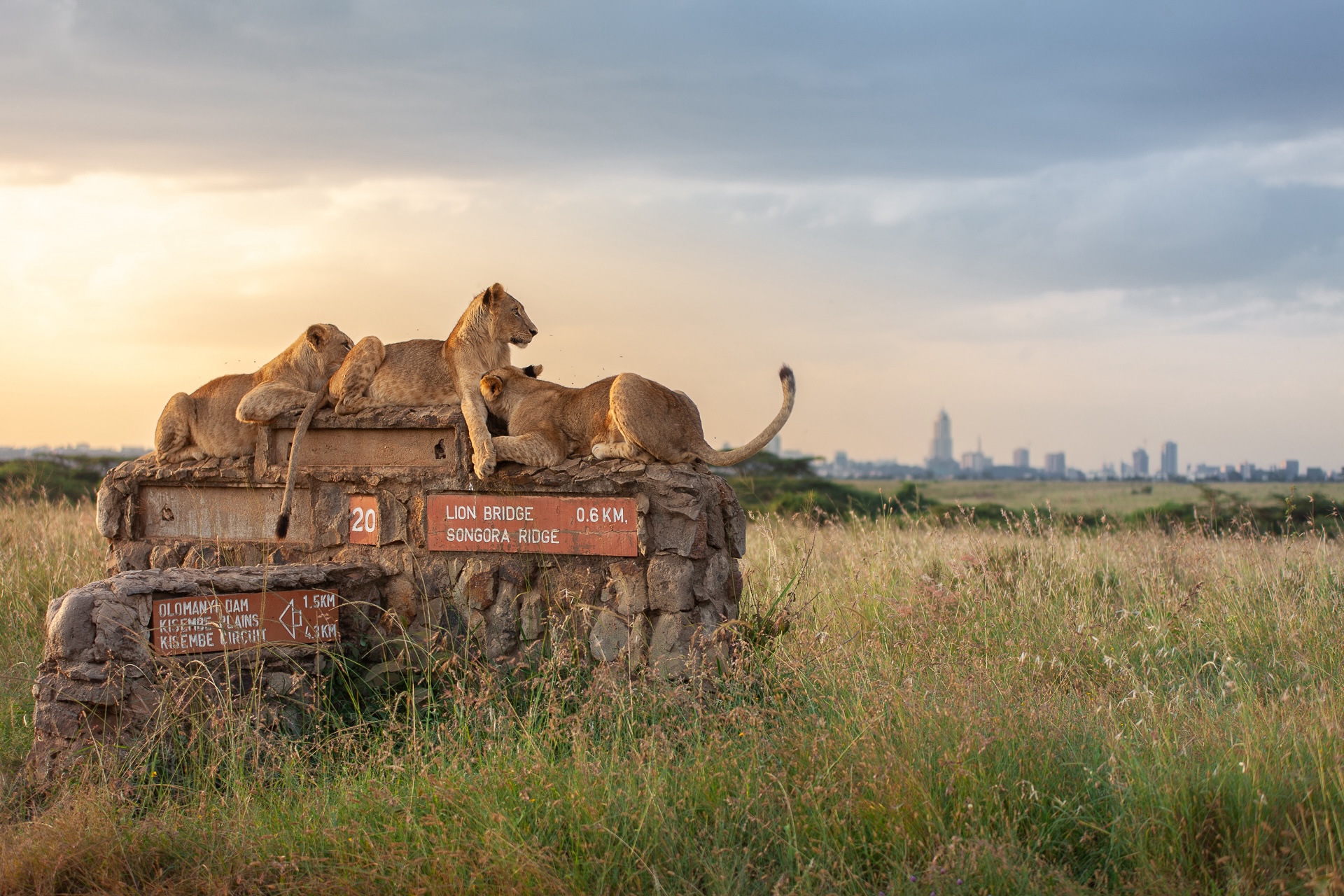
Yes. A small number of resident prides live in the park and are seen most days. Our guides look for them on the open plains and along the Athi Basin in the first two hours after the gates open, often by following the calls of alarmed impala and zebra rather than driving to a fixed spot.
Can you see rhinos in Nairobi National Park?+
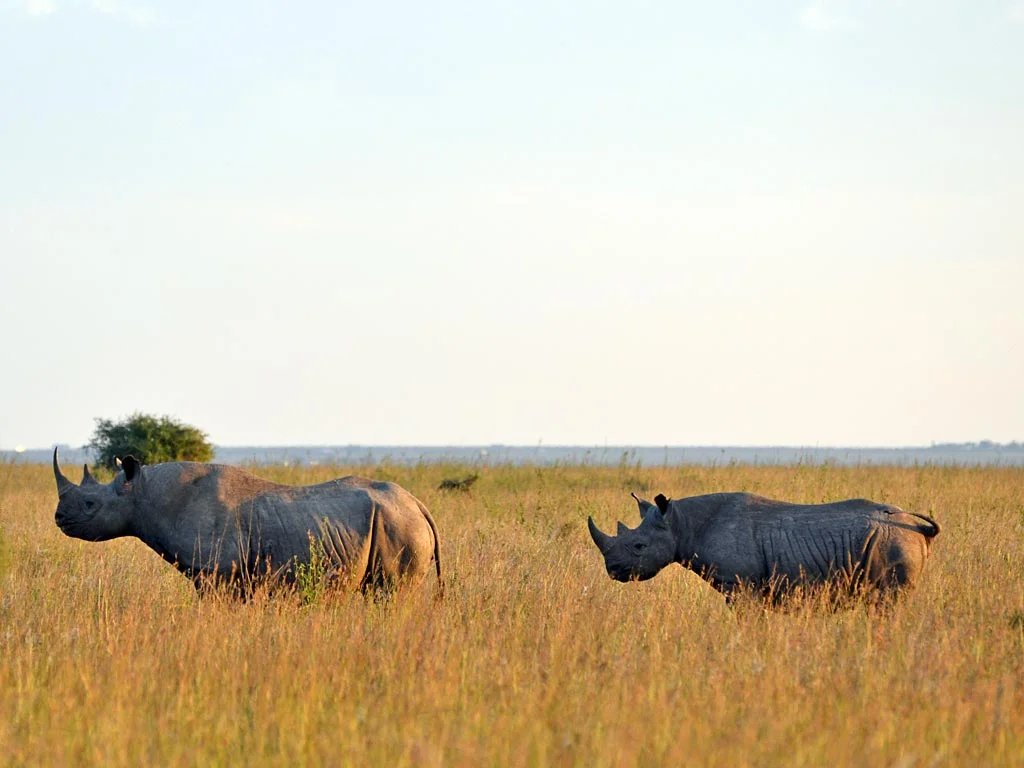
Yes — this is the park's single strongest card. Both black and white rhino are present in high density. Our guides regularly encounter black rhino on the western plains early in the morning while the grass is still cool and they are still out in the open; by mid-morning they push back into thicket and are much harder to find.
How much does it cost to enter Nairobi National Park?+
Approximately USD 43 per non-resident adult per day, with lower rates for residents, citizens and children. Fees are set by Kenya Wildlife Service and must be paid in advance via eCitizen or a Safaricard — see our park fees page for the current table.
What are the opening hours?+
Gates open at 06:00 and close at 18:00 (some gates stop admitting new vehicles at 16:00 or 17:00). All visitors must be out of the park by 18:30. Carry the ID or passport used for your booking.
Which gate should I use?+
Main (Langata) Gate is the KWS headquarters gate and best for first visits and for combining with the Safari Walk or Animal Orphanage. East Gate suits arrivals from Mombasa Road and JKIA. Mbagathi Gate, in the southwest, is the quietest and closest to the lodges on the southern boundary.
How far is Nairobi National Park from Nairobi city centre?+
About 7km — typically 20 to 40 minutes to Main Gate depending on traffic on Langata Road. Leave the city by 05:15 for a 06:00 gate opening.
How far is Nairobi National Park from JKIA airport?+
Roughly 30 to 45 minutes from Jomo Kenyatta International Airport via Mombasa Road to East Gate, traffic depending. Wilson Airport is closer, around 15 minutes from Main Gate.
Can I visit Nairobi National Park on a layover?+
Yes, and it is one of the few genuine safaris in the world you can fit around a flight. Allow six hours door to door for a half-day drive with airport pickup and drop-off; we ask for bookings at least two days ahead, and hotel or airport transfers are USD 50 extra.
How long should I spend in Nairobi National Park?+
A half-day drive of four to five hours covers the highlights. A full day (06:00–16:00) lets you reach the Athi dams, Hippo Pools and the Ivory Burning Site at an unhurried pace and gives a far better chance of cats and rhino.
Can I stay overnight in Nairobi National Park?+
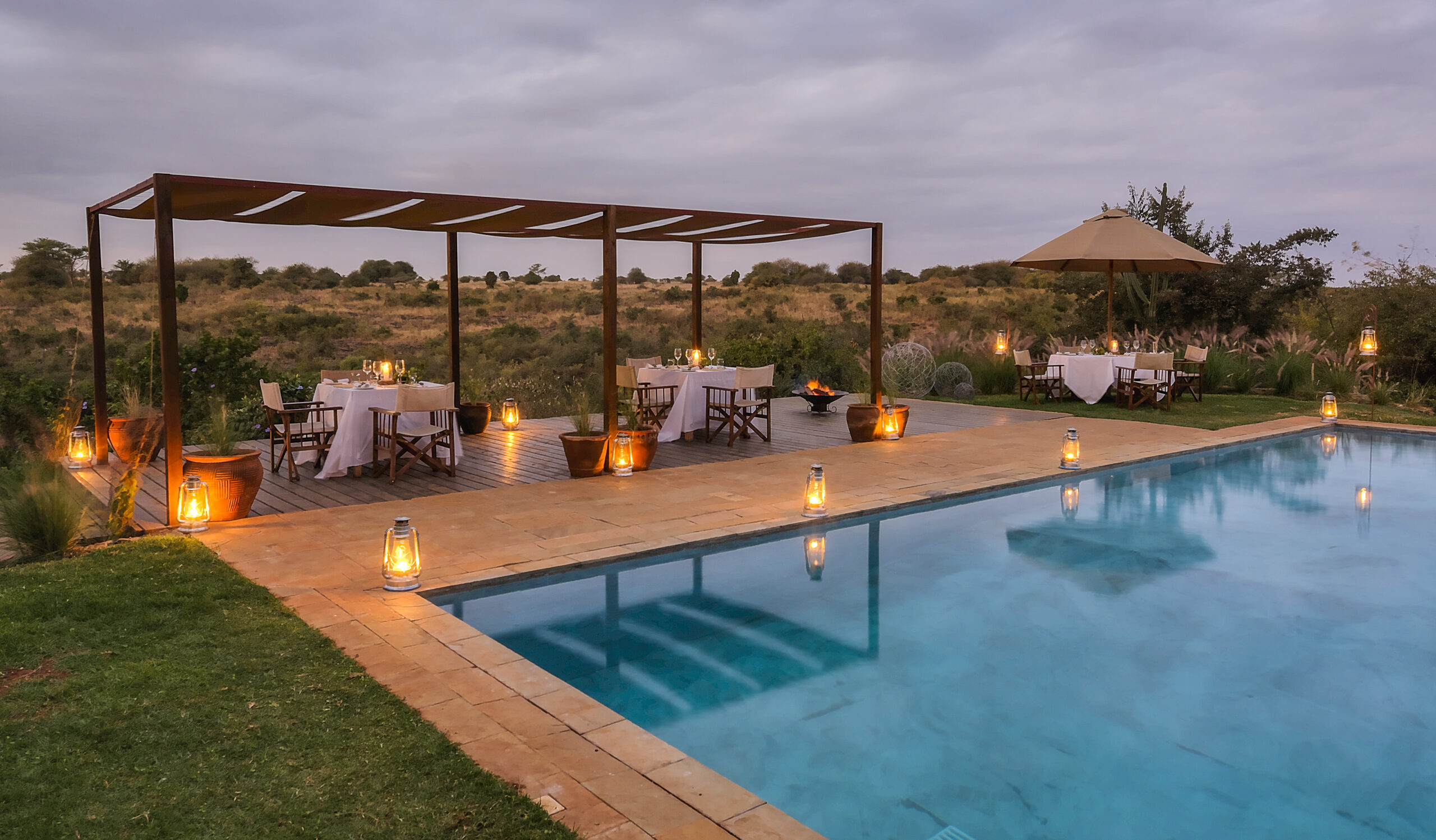
You cannot sleep inside the park itself, but you can stay on its boundary. Ololo Safari Lodge and Farm sits on the southern boundary across the Mbagathi River, and The Emakoko is built into the valley on the northern boundary — both put you at a gate before the day visitors arrive.
Where should I stay and what are the best lodges?+
For a park-edge stay, Ololo Safari Lodge and Farm (southern boundary, working farm, family-friendly) and The Emakoko (riverside, closest to the Sheldrick nursery) are the two standout properties. Both are compared side by side on our camps and lodges page.
What should I bring?+
The ID or passport used to book, warm layers for a 06:00 start at 1,600m altitude, binoculars, sun protection, water and a camera with at least a 200mm lens. Bring cash for tips and snacks; there is no shop inside the park beyond the gate kiosks.
What activities are available?+
Morning and afternoon game drives, full-day drives, the Nairobi Safari Walk, the Animal Orphanage, the Sheldrick elephant nursery, the Giraffe Centre, the Hippo Pools walking trail, the Ivory Burning Site Monument, picnics at the Athi dams and birdwatching.